
Brug tussen Business & Tech

Geen Black Box, het is altijd duidelijk waarop uw beslissingen gebaseerd zijn

Co-creatie aan oplossingen die blijvend worden geadopteerd
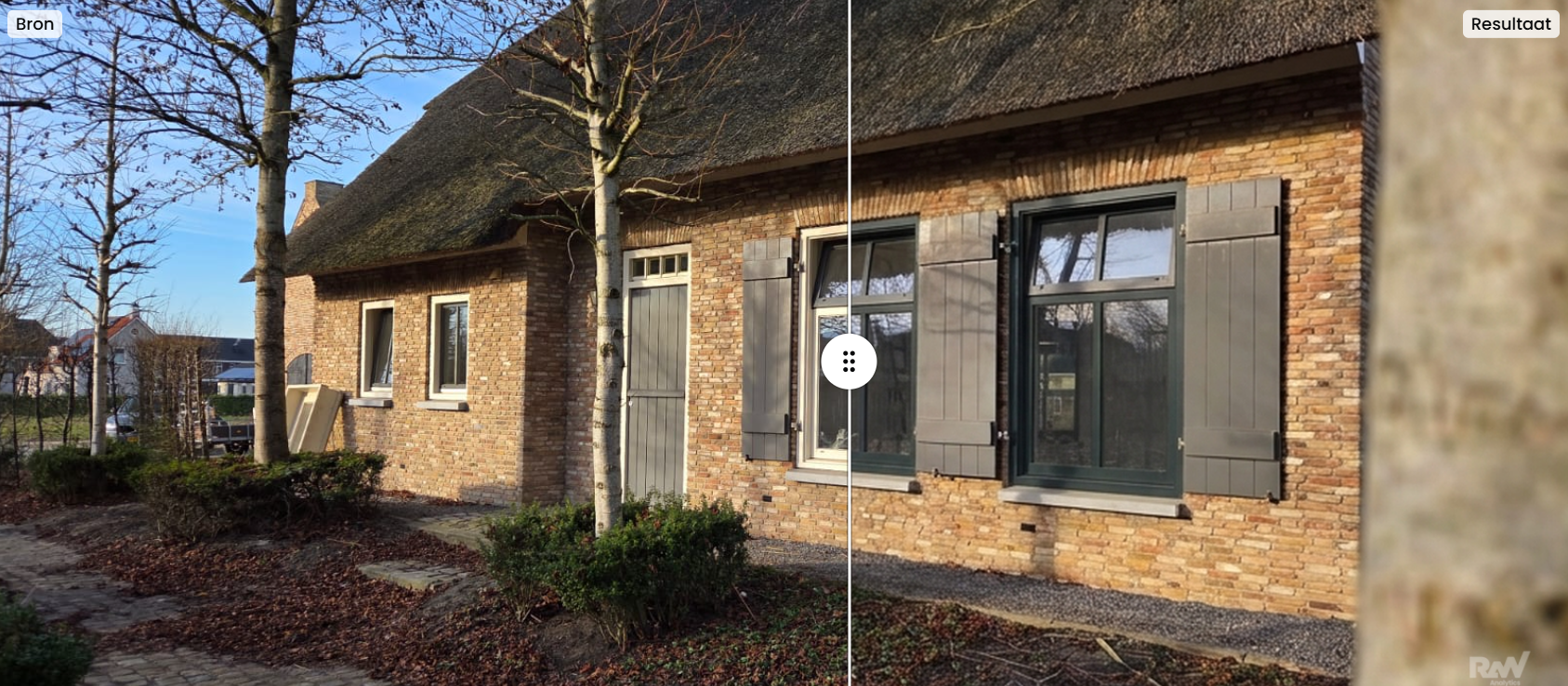
Nieuwe kozijnen zijn een flinke investering, vaak tienduizenden euro's. Toch is de manier waarop klanten hun kleur- en stijlkeuze maken nauwelijks veranderd: ze bekijken kleine kleurstalen in een showroom en proberen zich voor te stellen hoe het resultaat eruitziet. Op hun eigen woning, op schaal, in het juiste licht.
Dat is lastig. Kleuren gedragen zich anders op een klein staaltje dan op een volledig gevelbeeld. Wat er goed uitziet op een monster, kan op een woning heel anders uitpakken — en andersom. Het gevolg is dat klanten twijfelen, beslissingen uitstellen, of meerdere afspraken nodig hebben voordat ze tot aankoop overgaan.
Voor de verkoopadviseurs betekent dit langere trajecten en meer tijd per klant. Niet omdat het product niet deugt, maar omdat de klant niet kan zien wat hij koopt. De klant vraagt in feite om iets heel redelijks: laat me zien wat ik krijg.
At the core of the solution is an AI rendering pipeline that generates realistic images of a home with different window frame colours, based on a photo of the property. Customers don't see a generic example — they see their own home, with colours that match the franchise's product range exactly.
That sounds simpler than it is. The pipeline was developed iteratively, with multiple approaches tested and refined: from leveraging publicly available models to a fully custom pipeline with image segmentation, masking, and controlled inpainting. The goal was the same throughout: to reach a level of realism and consistency that is good enough for customers to base what is ultimately a major purchase decision on. That requires more than an API call to a generic AI model.
The entire solution was developed and delivered in a matter of weeks. This is possible because RAW Analytics works on its own SaaS foundation, in which authentication, infrastructure, compliance, and multi-tenancy are already in place. That eliminates weeks to months of technical groundwork and lets the team get straight to what matters: the solution itself.
A standalone rendering model doesn't solve a commercial problem on its own. It has to fit the way people actually buy. That's why the solution is designed around three moments in the customer journey.
Before the showroom visit
After booking an appointment, customers receive an email with a link to upload photos of their home. The process is simple — a few exterior photos are enough. The accompanying communication is deliberately designed to set expectations and shift the tone of the visit: from a standard sales conversation to something interactive that the customer looks forward to.
During the visit
In the showroom, the sales advisor uses the tool on a tablet to generate renders on the spot. Different colours and combinations are shown directly on the customer's own home, including the option to choose separate colours for the frame and the sash. That changes the character of the conversation. Instead of describing what a colour might look like, the advisor can show it. Customers compare options side by side and arrive at a preference during the appointment itself.
After the visit
Afterwards, the customer receives a personal link to a gallery with their favourite renders. They can view it at home in their own time, share it with a partner or family, without the pressure of a showroom setting. For the franchise, this also yields useful information: they can see whether and how often the renders are viewed, which helps them follow up at the right moment and in the right way. Expiry and access are kept under control.
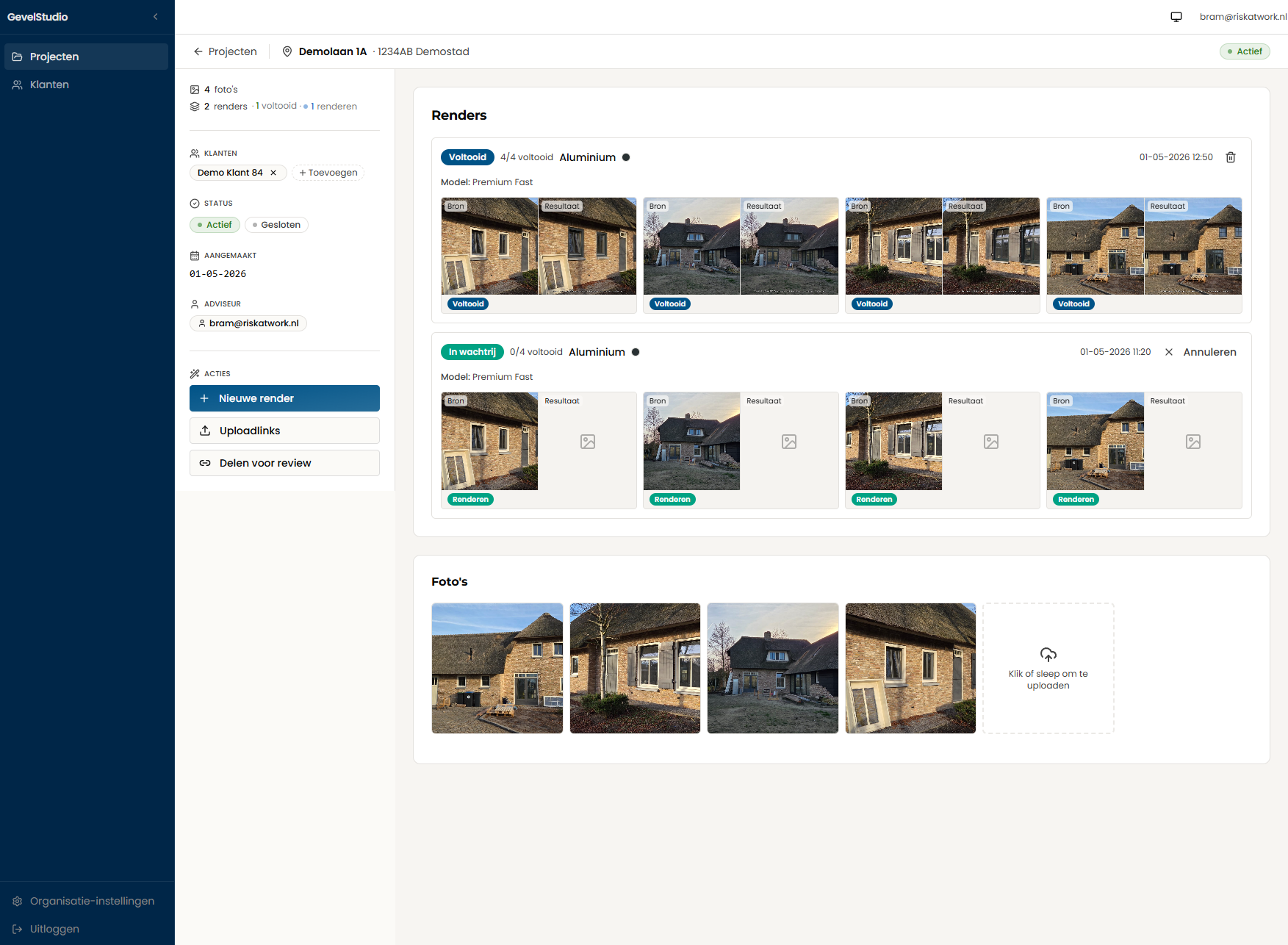
Generieke AI-beeldtools zijn inmiddels behoorlijk capabel. Met de juiste prompt kun je indrukwekkende resultaten krijgen. Maar er zit een wezenlijk verschil tussen een los experiment en een tool die daadwerkelijk in een verkoopproces functioneert.
Een generiek model kent het kleurenaanbod van de klant niet. Het kan renders niet koppelen aan producten uit de catalogus. Het integreert niet in een bestaand verkoopproces, verstuurt geen communicatie vooraf, en levert geen engagement-data achteraf. En de output draagt niet de visuele identiteit van het merk — geen juiste kleurweergave, geen logo, geen consistente merkervaring.
Wat we hebben opgeleverd is een werkende tool, ontworpen rondom hoe deze specifieke organisatie verkoopt, wat hun klanten nodig hebben om met vertrouwen te beslissen, en wat hun teams nodig hebben om effectief te werken. De praktische waarde van AI zit niet in het model zelf, maar in hoe goed het aansluit op het probleem.